







English
This manual is applicable to small wheel dumpers. The failure rate and service life of the machine depend entirely on standardized maintenance. The content covers pre-operation daily maintenance, post-operation daily maintenance, 250-hour monthly maintenance, 500-hour quarterly maintenance, 2000-hour annual overhaul, long-term storage maintenance, differentiated maintenance for different working scenarios and safety operation rules. It covers the full systems including engine, hydraulic system, chassis, tipping bucket mechanism and electrical components, and complies with the factory’s 1-year warranty maintenance standards.
1. Daily Pre-operation Maintenance (10 Minutes Before Starting Work)
1.1 Engine Inspection
Engine Oil: Park the machine on flat ground, turn off the engine and wait for 5 minutes before checking the oil dipstick. The oil level shall stay between the minimum and maximum scale marks. Add CF-4 15W-40 diesel engine oil if insufficient, never mix engine oil of different grades.
Coolant: Check the liquid level of the auxiliary water tank when the engine is cold. Add special antifreeze coolant if the liquid level is low. Inspect water pipes and water tank for leakage, and clear straw and silt on cooling fins to avoid cylinder pulling caused by overheating.
Fuel: The fuel tank capacity is 30L. Keep fuel volume above 1/4. Fill with standard EURO5 diesel to prevent impurities from blocking the oil circuit.
Air Filter & Belt: Ensure the air filter housing is intact with tight sealing. The generator belt shall have no cracks, with deflection controlled at 10-15mm. Tighten the belt timely if loose.
External Fastening Inspection: Check all bolts of engine mounts, exhaust pipes and oil pipes for looseness.
1.2 Hydraulic System Inspection
Hydraulic Oil Level: Lower the tipping bucket completely before checking the liquid level of the hydraulic oil tank. Stop the machine and replace oil immediately if the oil turns white-emulsified or black. Use VG46 anti-wear hydraulic oil only.
Leakage Inspection: Inspect the gear pump, multi-way reversing valve, wheel hydraulic motors, lifting cylinders and all high-pressure pipe joints. Oil seepage on piston rods indicates aging oil seals which need to be replaced in advance.
Breathing Cap: Clean dust on the hydraulic tank breathing cap to guarantee smooth oil circuit ventilation.
Functional Test: Start the engine at idle speed, operate the control handle to complete 72° tipping and ±90° bucket side rotation. No jamming or automatic bucket sliding is allowed. If the bucket slides down by itself under pressure, overhaul the multi-way valve before operation.
1.3 Chassis, Tires and Brake System
Tires: Tire specification 10.0/75-15.3. Standard tire pressure: 2.2bar with no load, 1.8bar with full load. Remove stones and nails embedded in treads. Replace tires if tread depth is less than 5mm.
Wheel Hub Bolts: Retighten all four wheel nuts to avoid driving vibration and tire falling off.
Brake System: The parking brake shall lock firmly. Service brake responds sensitively without deviation. No leakage on brake pipelines.
Chassis: Clear silt on the frame and motor housing. Check for collision cracks and ensure no foreign objects block the minimum ground clearance of 227mm.
1.4 Tipping Bucket Mechanism, Electrical and Safety Parts
All grease nipples of bucket hinge pins and lifting rotary shafts shall be unobstructed with no dry friction abnormal noise. The 0.5m³ bucket shall have no welding cracks or deformation.
No oxidation on battery terminals with tight wiring. Headlights, horn and dashboard indicators work normally after self-check. No worn or broken wires.
Canopy and seat are fixed firmly. Clear residual sand and gravel inside the bucket.
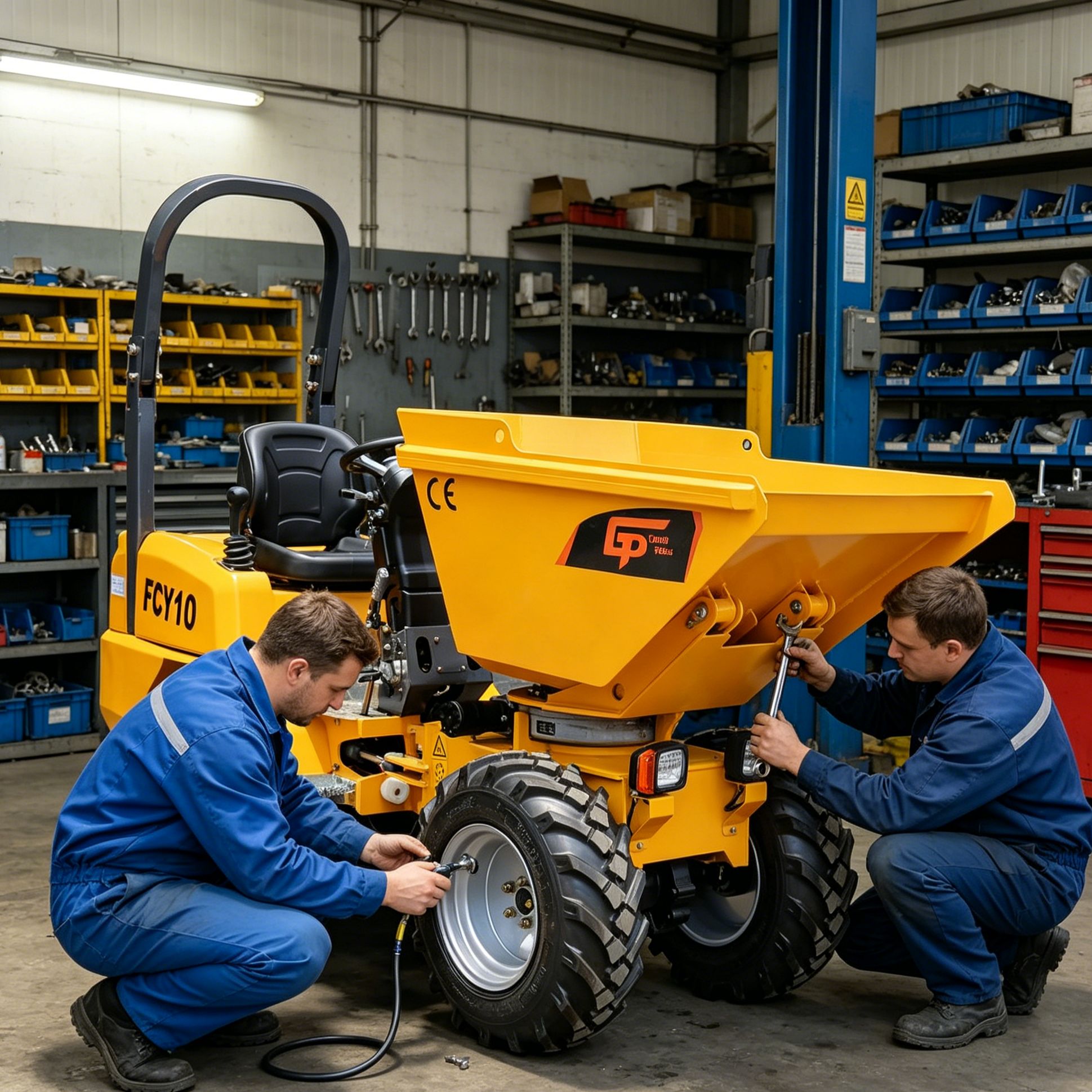 2. Daily Post-operation Maintenance (15 Minutes After Work)
Machine Cleaning: Rinse the chassis, tires and bucket with clean water. Do not spray high-pressure water directly onto air filter, battery and hydraulic valves. Completely remove caked concrete and mud to prevent rust.
Pressure Relief & Reset: Lower the bucket flat and retract side tipping cylinders to release residual hydraulic pressure, slowing down aging of oil seals under long-term pressure.
Lubrication Refill: For muddy or heavy-load working conditions, fill all hinge pins with No.2 lithium base grease until old grease extrudes out to isolate silt.
Engine Cooling: After full-load operation, keep the engine idling for 3-5 minutes for cooling before shutdown, preventing high-temperature damage to cylinders and oil seals.
Parking Standard: Park on flat and dry ground, pull the parking brake and block tires with triangular wooden wedges. Cover the driving compartment for outdoor storage and refuel diesel timely.
Fault Recording: Record faults such as oil leakage, slow lifting and abnormal noise, and repair them during next maintenance. Do not operate with faults under full load.
3. 250-Hour Monthly Maintenance (Every 30 Days / 250 Working Hours)
3.1 Engine Maintenance
Air Filter Cleaning: Blow dust from inside to outside with low-pressure compressed air below 0.3MPa. Clean twice in heavy dust environment, and replace the filter if cleaned over 3 times.
Drain Water from Fuel Filter: Open the drain valve at the bottom to discharge accumulated water and impurities, protecting precision EURO5 fuel injection components.
Cooling System Cleaning: Brush out debris in gaps of water tank cooling fins to ensure heat dissipation efficiency.
Secondary Tightening of All Bolts: Retighten all bolts of exhaust pipes, engine mounts and oil pipelines.
3.2 Hydraulic System Maintenance
Clean the breathing cap of hydraulic oil tank and replace the return oil filter if blocked.
Tighten all hydraulic pipe joints, replace sealing gaskets for slight oil seepage. Polish minor scratches on piston rods.
Operate bucket lifting and side rotation 10 times with no load to exhaust air inside oil circuits and eliminate shaking and abnormal noise.
3.3 Chassis Travel System
Recheck and tighten all bolts of frame, wheel hydraulic motors and steering mechanism.
Check wheel hydraulic motors for leakage and abnormal noise, clear silt on motor housing for heat dissipation.
Replace steering ball joints if clearance exceeds 3mm. Remove foreign objects on tires, calibrate tire pressure and swap front and rear tires for even wear.
3.4 Electrical and Anti-rust Maintenance
Static battery voltage shall be no less than 12.4V. Clean oxidized terminals and coat with butter for rust prevention.
Tidy worn wire harnesses and wrap broken insulation with adhesive tape. Test starter and generator performance.
Derust and touch up paint on peeling areas of frame and bucket, and fill grease on all hinge pins.
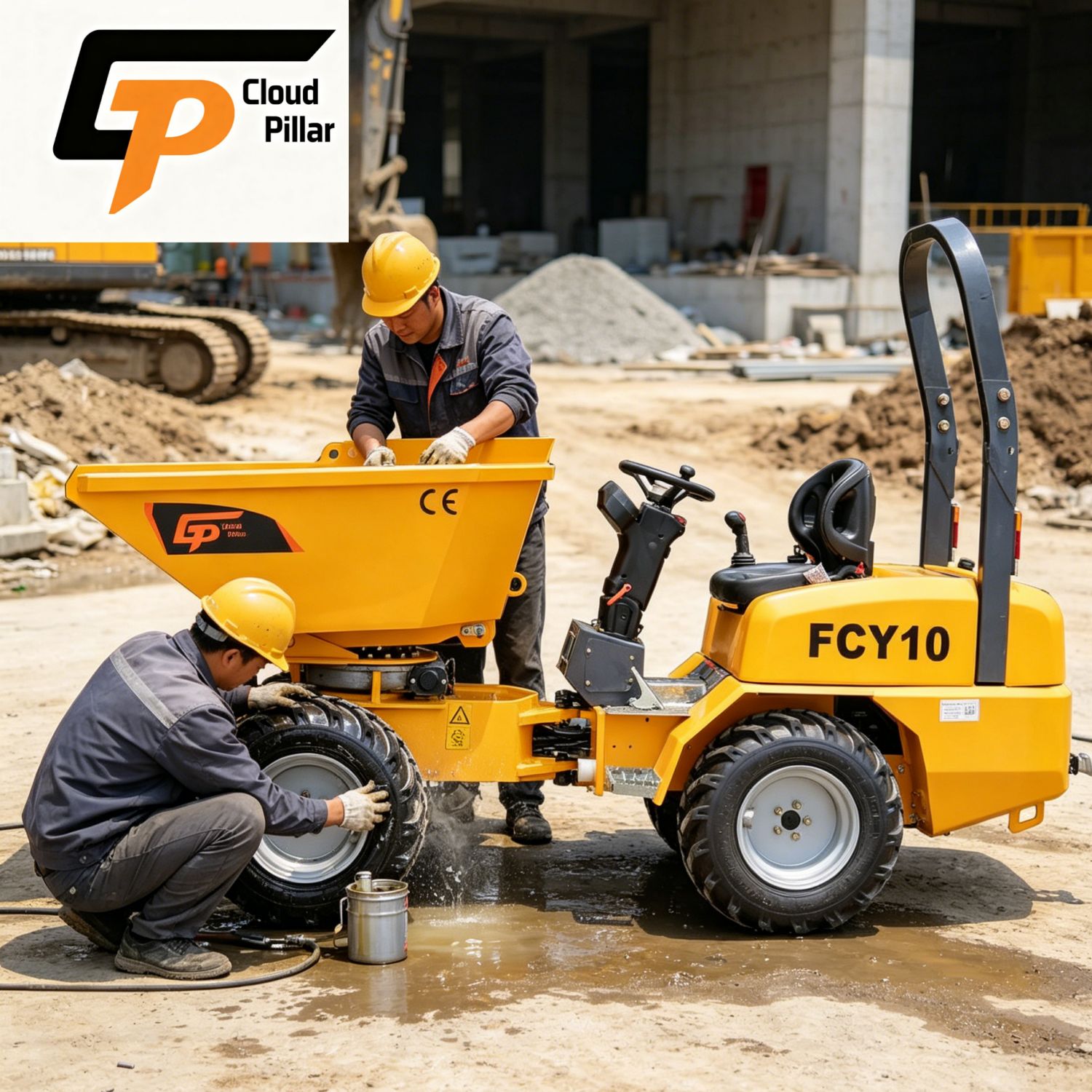
4. 500-Hour Quarterly Maintenance (Every 90 Days / 500 Working Hours; Mandatory for New Machines Within 50 Running-in Hours)
4.1 In-depth Engine Maintenance
Replace Engine Oil & Oil Filter: Drain old oil while the engine is hot, clean the oil pan strainer, and fill standard engine oil to the marked level. Shorten the replacement cycle to 300 hours under heavy load conditions.
Replace dual-stage fuel filters and exhaust air from oil circuits to avoid power shortage and flameout.
Mandatory replacement of air filter after 500 working hours, as paper filter pores cannot be fully cleaned.
Check coolant turbidity and replace antifreeze if deteriorated. Replace hardened and aging water pipes.
Observe exhaust smoke at idle speed. Disassemble and clean fuel injectors if black or white smoke appears, clear carbon deposits on intake and exhaust manifolds, and recheck valve clearances to eliminate abnormal noise.
4.2 Hydraulic System Overhaul
Replace suction and return oil filters, clean metal scraps adsorbed by magnets inside the oil tank. Replace all hydraulic oil immediately if oil turns black or emulsified.
Disassemble cylinders to inspect oil seals and dust rings, replace aging parts directly. Clean spools of multi-way reversing valves to eliminate handle jamming and weak lifting.
Check abnormal noise of hydraulic gear pumps, which indicates internal wear and requires advance maintenance.
4.3 Tipping Bucket, Chassis and Brake Overhaul
Disassemble brake system and replace brake shoes worn over half thickness. Drain old brake fluid and fill new brake fluid to solve soft braking.
Inspect welding seams of bucket and lifting support for stress cracks, and repair tiny cracks by welding reinforcement.
Drain gear oil of wheel motor reducers and replace with new oil if mixed with impurities. Disassemble hinge pins to clear silt and refill grease.
5. 2000-Hour Annual Full Overhaul (Every 12 Months / 2000 Working Hours, Matches 1-Year Warranty Cycle)
5.1 Full Engine Maintenance
Replace engine oil filter, dual fuel filters and air filter all at once. Drain all old coolant, clean scale inside water tank and engine water channels, and replace all aging water pipes and water pump seals. Adjust valve clearances, replace valve oil seals and cylinder gaskets. Clean fuel tank and pipelines, overhaul fuel injectors and high-pressure oil pumps. Disassemble and maintain generator and starter, replace worn carbon brushes.
5.2 Full Hydraulic Oil Replacement
Lift the bucket to the maximum dumping height of 2327mm, drain all old hydraulic oil inside cylinders and pipelines. Clean the inner wall of oil tank, install new suction and return oil filters, fill VG46 hydraulic oil and exhaust air from oil circuits. Uniformly replace all cylinder oil seals, dust rings and pipe sealing gaskets. Replace cracked aging high-pressure pipes as a whole, calibrate pressure of hydraulic pump and multi-way valve to restore lifting power.
5.3 Chassis Travel Overhaul
Replace tires with excessive wear or cracks. Disassemble wheel hubs and fill bearings with grease to eliminate driving buzzing noise. Disassemble wheel hydraulic motors, replace internal oil seals and worn parts, and renew reducer gear oil. Replace worn steering ball joints and bushings, calibrate steering clearance. Derust and repaint the whole frame, repair all welding cracks and restore wear-resistant coating of the bucket.
5.4 Brake, Electrical and Safety Component Overhaul
Fully replace brake shoes, wheel cylinders, pipelines and brake fluid, and adjust locking force of parking brake. Replace batteries with capacity attenuation over 30%, and renew all aging wire harnesses. Overhaul lights, reverse alarm, canopy, seat, control handle and other wearing parts, and complete missing safety warning labels.
5.5 Full Machine Lubrication Coverage
Disassemble and clean all hinge pins and connection points of the whole machine, fill with new grease to eliminate dry friction loss.
6. Maintenance for Long-term Storage
6.1 Short-term Storage (15–90 Days)
Fully clean and dry the whole machine, spray anti-rust oil on exposed metal surfaces. Lower the bucket completely to release pressure and retract all cylinders. Fill the fuel tank fully to isolate air, disconnect the negative battery terminal and charge the battery once a month. Lift tires off the ground to avoid permanent deformation from single-point pressure, pull the parking brake and cover the driving compartment. Refill grease to all lubrication nipples.
6.2 Long-term Storage (Over 6 Months)
Drain engine oil, hydraulic oil, coolant and gear oil when the engine is hot, clean oil tanks and oil pans. Fill anti-rust oil into the engine and seal air intake and exhaust ports to prevent dust ingress. Coat all rubber parts with special rubber protectant to slow aging. Remove the battery and store it indoors with monthly charging. Place the machine in a dry warehouse and cover with full rainproof cover. Complete the full 2000-hour overhaul and replace all oil and filters before reusing the machine after storage.
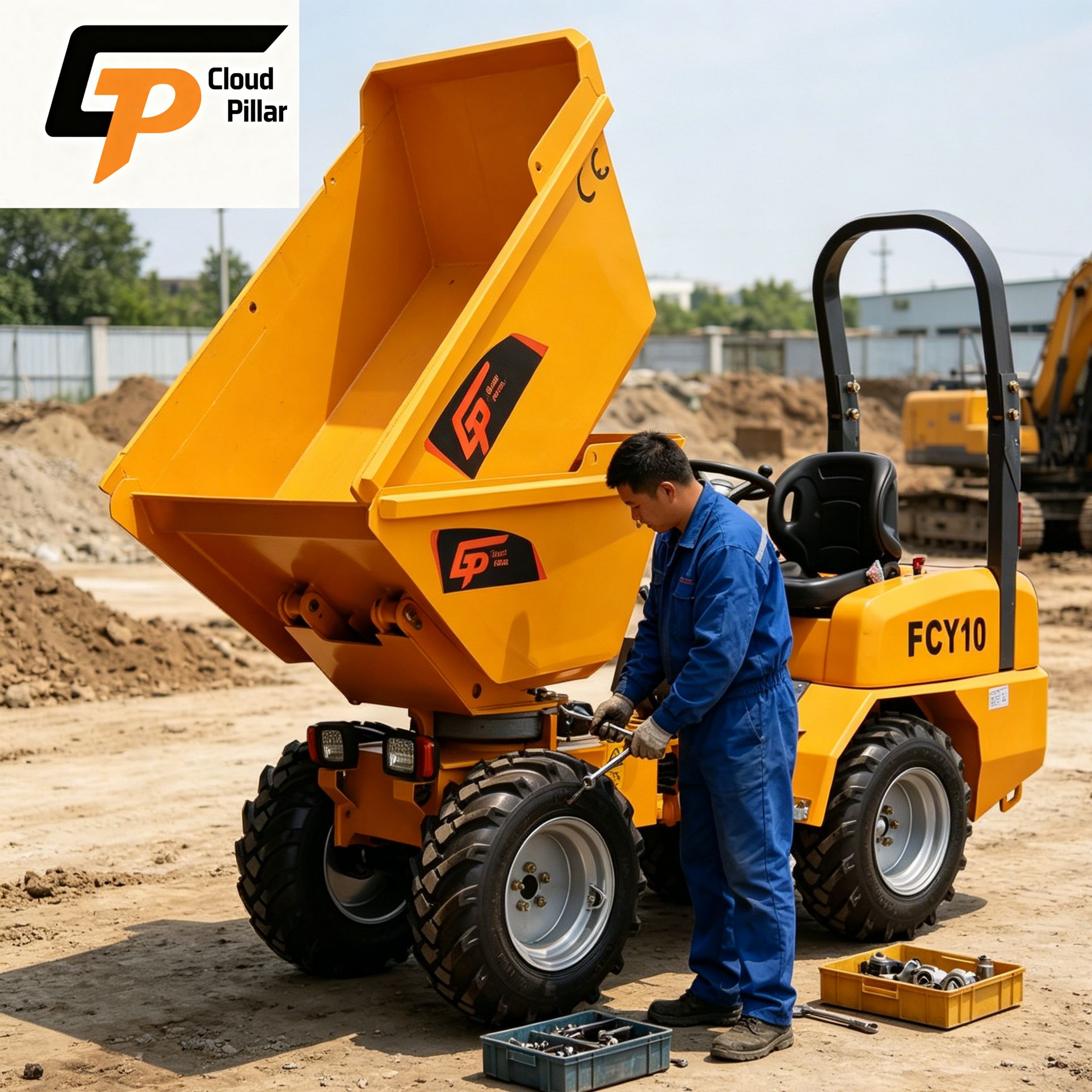
7. Differentiated Maintenance for Different Working Scenarios
Orchard / Greenhouse Soft Soil & Humid Working Condition: Clean air filter daily and replace it mandatorily after 250 hours. Clear branches on cooling fins every day. Refill grease to lubrication points daily. Rinse chassis for rust prevention weekly. Shorten hydraulic oil replacement cycle to 1000 hours.
Construction Sand & Stone Heavy-load Working Condition: Replace engine oil and three filters every 300 hours. Clear stones embedded in tires daily and calibrate tire pressure weekly. Inspect lifting welding seams every 250 hours. Check piston rods of hydraulic cylinders weekly to prevent scratch and oil leakage.
Farm Organic Fertilizer Transport Working Condition: Rinse the bucket thoroughly after each operation as acid-base materials corrode steel plates. Derust and touch up paint on frame weekly. Install protective sleeves for electrical wire harnesses to avoid terminal corrosion by water vapor.
8. Pre-fault Preventive Maintenance (Reduce Overhaul Costs In Advance)
Slow lifting & automatic bucket sliding: Caused by deteriorated hydraulic oil, blocked filters or internal leakage of multi-way valve. Clean valve groups and replace oil & filters during quarterly maintenance.
Black exhaust & insufficient engine power: Caused by blocked air filter, water mixed in diesel or carbon deposits on fuel injectors. Strictly follow the 500-hour cycle for three filters replacement.
Driving deviation & heavy steering: Caused by uneven tire pressure or worn steering ball joints. Calibrate clearance and tire pressure during monthly maintenance.
Continuous hydraulic oil seepage: Caused by loose joints or aging oil seals. Tighten joints monthly and replace full set of sealing parts during annual overhaul.
Difficult startup & dead battery: Caused by oxidized terminals or faulty generator. Inspect battery daily and overhaul charging system quarterly.
Abnormal noise & jamming of bucket hinge pins: Caused by insufficient lubrication and silt jamming. Refill grease after daily work.
9. Safety Rules for Maintenance Operation
Shut down and cool the engine before overhauling engine and hydraulic systems. Release residual pressure of oil circuits before disassembling cylinders. Support the bucket with solid wooden blocks when repairing chassis under lifted bucket; never rely only on hydraulic cylinders to avoid bucket falling and injury.
Only use factory-specified engine oil, hydraulic oil and antifreeze. Mixing different oil types will cause machine wear and void the 1-year warranty.
Do not spray high-pressure water directly onto battery and electrical components; wipe dust with dry cloth. Preheat the engine under low temperature in winter, do not operate under full load climbing (maximum gradeability of this machine is 30%).
Prioritize original factory spare parts for replacement. Low-quality filters and oil seals accelerate machine loss, and damage caused by non-original parts is not covered by warranty.
Recycle waste engine oil, waste hydraulic oil and used filters uniformly; do not dump them randomly to avoid environmental pollution.
Address:No. 268 Yuhe Road,Weifang City, Shandong Province China.
Email:davidcp712@gmail.com
©2009-2026 Weifang CP Machinery Co.,LTD. All Rights Reserved. Privacy Policy | Terms of use |